What if summer could be more than a break from work?
In this episode of Leadership Story Talks, hosts Jerome Deroy and Julienne Ryan reflected on the arrival of summer as an opportunity not just to pause, but to be intentional about how we pause. We often think of the beginning or end of the year as the natural moments for reflection: we look back, look ahead, set goals, and consider what we want to change. But summer offers its own kind of threshold.
For many people, summer brings time off, a shift in routine, a slower pace, or at least the hope of one. But without intention, that time can disappear quickly. We can spend the beginning of summer already worrying about its end, counting down the days until work resumes, and missing the chance to let the season nourish us while we are in it.
Jerome offered a different possibility: what if we entered summer with a frame of mind that allowed us to leave it feeling inspired, generative, and renewed?
The Memories That Shape a Season
Julienne began with one of the great rituals of summer: the summer reading list. For her, those lists were not simply assignments. They were part of the texture of growing up — lying in the backyard in Queens, working through everything from Greek mythology to the particular books chosen by a teacher, while her mother called out the window to ask if she was still reading.
That memory captures something many of us recognize. Summer often has a sensory quality that stays with us: the heat, the light, the backyard, the book in hand, the feeling of time stretching out a little further than usual.
For Jerome, who grew up in France, summer was connected to time off and family. Since moving to the United States, he has noticed the cultural difference in how vacation is treated. In France, time off is closer to sacred. Summer was the rare period when his father, who worked a great deal, was more available. Those weeks became cherished memories because they brought the family together in a way the rest of the year often did not.
Both stories point to the same truth: summer is rarely only about the season itself. It is also about what the season makes possible — rest, reading, family, memory, togetherness, and a different relationship with time.
When a Holiday Becomes Personal
The conversation then turned to the Fourth of July, and Julienne shared a story that moved from fear to belonging.
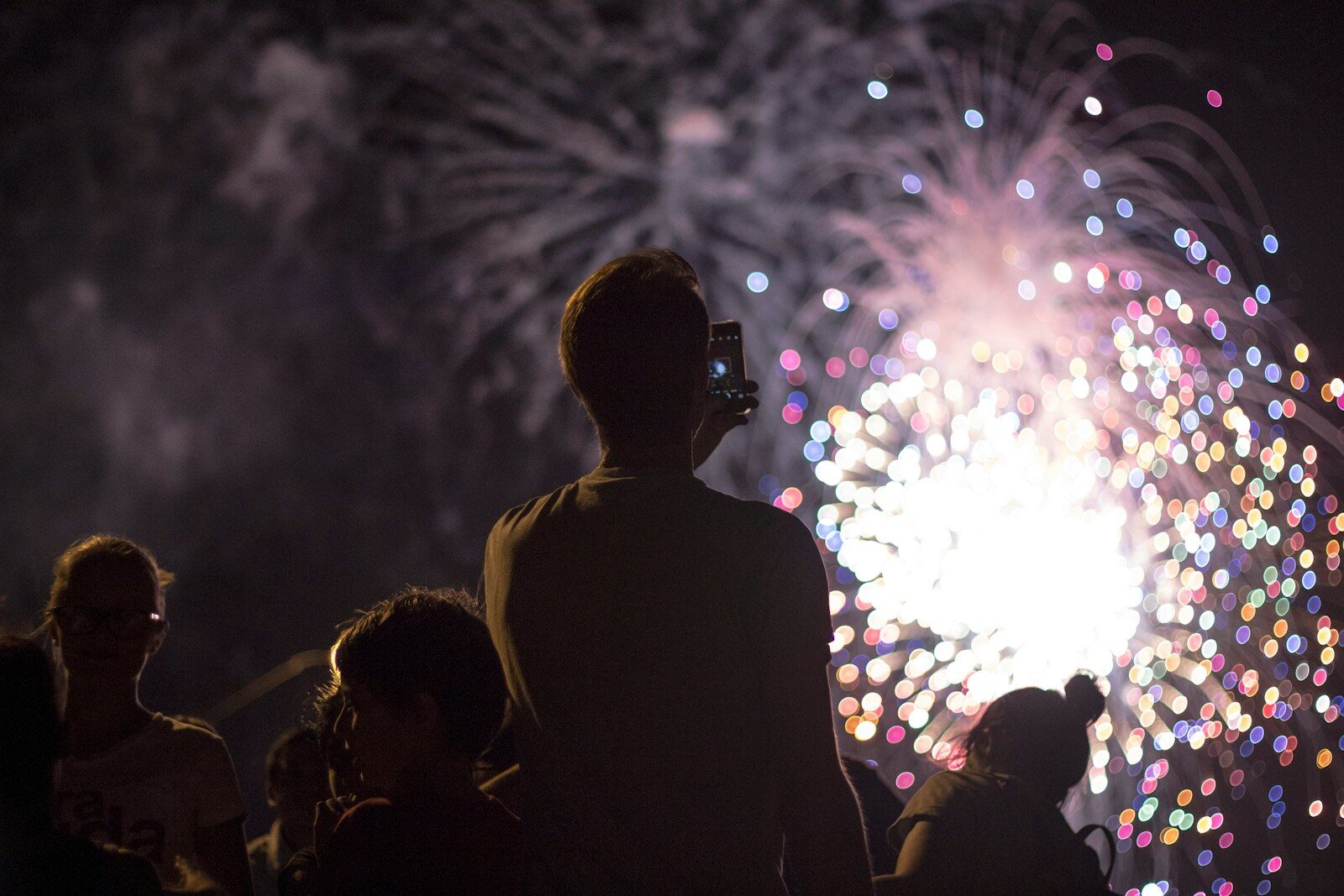
When she was very young, she went with her parents and older brother to watch fireworks by the Hudson River. There was a large explosion, smoke rose from the river, and although she was only four, she knew something was wrong. For years afterward, fireworks frightened her. The image stayed with her and shaped how she felt about the holiday.
But as time passed, other memories began to attach themselves to the Fourth of July. She remembered sitting on the front steps of her house in Queens, seeing flags in the neighbors’ yards, smelling food from many different homes, and watching people gather outside. As a first-generation American, she also remembered the excitement of being invited somewhere for “real American food” — hamburgers, potato chips, pretzels, ketchup — the everyday details that can feel vivid and meaningful when they are part of learning a culture from the inside.
Her favorite Fourth of July memory, however, happened far from the United States. As a student in Denmark, Julienne attended a cultural event about the Vikings with a group of Americans. During the program, an announcement was made in Danish and then in English: there were Americans in the audience, and it was also their Fourth of July. A sea of faces turned toward them. Later that night, there were fireworks.
The gesture mattered. A group of people far from home had been seen, welcomed, and acknowledged. For Julienne, those fireworks helped soften the earlier frightening memory. They turned the holiday into something warmer.
Hosting, Belonging, and the Power of Being Seen
Jerome drew out the deeper lesson in Julienne’s story. At Narativ, hosting is part of the work: hosting podcasts, workshops, training programs, and conversations. And at the heart of good hosting is the ability to make people feel welcome, comfortable, safe, and like they belong.
That is what happened in Denmark. The hosts did not need to create a grand gesture. They simply noticed who was in the room and made space for their experience. Julienne’s Fourth of July became part of their event, and their event became part of her story.
This is one of the reasons personal stories are so powerful. Everyone may recognize a holiday like the Fourth of July in broad strokes: fireworks, heat, food, gatherings, flags. But a story becomes memorable when it reveals the specific human experience inside the familiar event.
We often dismiss our own stories because we assume they are too common. Everyone has a holiday story. Everyone has a summer memory. Everyone has had a first day, a family gathering, a moment of homesickness, a meal that mattered, or a tradition that changed meaning over time. But the value is not in whether the category is unique. The value is in the details only you can tell.
That is where listeners connect.
Summer Reading as an Invitation
From there, Jerome and Julienne turned toward summer reading and the books that might accompany a reflective season.
Julienne spoke about Dean Foster’s work and the way his stories demonstrate the power of listening, presence, and not assuming we already have the answers. His work across cultures and communities offers a hopeful reminder that understanding can be built even in situations that might first appear impossible. If those bridges can be created across countries, cultures, and complex environments, perhaps we can bring the same spirit into our homes, workplaces, and difficult conversations.
She also reflected on John A. Graham’s book Quest, describing it as a compelling journey where every chapter seems to raise the question of how so much could happen in one person’s life. What stayed with her was not only the adventure, but the honesty of the voice on the page and the sense of someone listening to his internal compass along the way.
Jerome added Connecting Through Circles by Cecilia Loving and Gina Liao, a practical and example-rich book about creating connection among people from very different backgrounds and belief systems. The book offers methods for forming and facilitating circles, but what Jerome highlighted most was the evidence of people connecting in situations where connection might not have seemed possible.
He also mentioned Atomic Habits by James Clear, a book about how small changes can help us shift long-standing patterns. Summer reflection does not always have to lead to a dramatic reinvention. Sometimes the most lasting change begins with something small enough to repeat.
Books as Allies
Julienne described books as allies, a phrase that captures why reading can matter so much during a season of reflection. Books can accompany us, challenge us, comfort us, and open doors into lives and ideas we might not otherwise encounter.
For someone who grew up shy and introverted, books were a kind of support system. They were places to learn, escape, imagine, and grow. There is a lovely symmetry in hearing her reflect on that early bookworm self while now speaking publicly, hosting conversations, and helping others find their own voices.
That is another quiet lesson from the episode. The things that supported us when we were younger may still be shaping how we lead, communicate, and connect today. A childhood spent reading may become an adult life spent listening. A summer memory may become a teaching story. A holiday that once frightened us may become a story about being welcomed far from home.
What Will You Notice This Summer?
At the end of the episode, Jerome and Julienne invited listeners to think about their own summer stories. What is a favorite Fourth of July memory? What was your first experience of the holiday if you came to it from somewhere else? What book stayed with you? What did you read that changed the way you understood yourself or the world?
These questions are not only nostalgic. They are storytelling prompts. They ask us to pay attention to the memories that still carry meaning and to notice the details that make those memories ours.
Summer can be a break, and sometimes that is exactly what we need. But it can also be a season for reflection, reconnection, and renewal. It can be a time to read something that expands us, revisit a memory that shaped us, or enter the next chapter with a little more intention.
Because the most productive kind of pause is not always about doing more.
Sometimes it is about noticing more clearly what has been with us all along.
Experience The Listening Lab
Great leaders aren’t just great communicators—they’re great listeners. Start your free one-month trial of The Listening Lab and strengthen one of the most valuable leadership skills you’ll ever develop: