
What happens when three personal stories, prepared separately, are heard together?
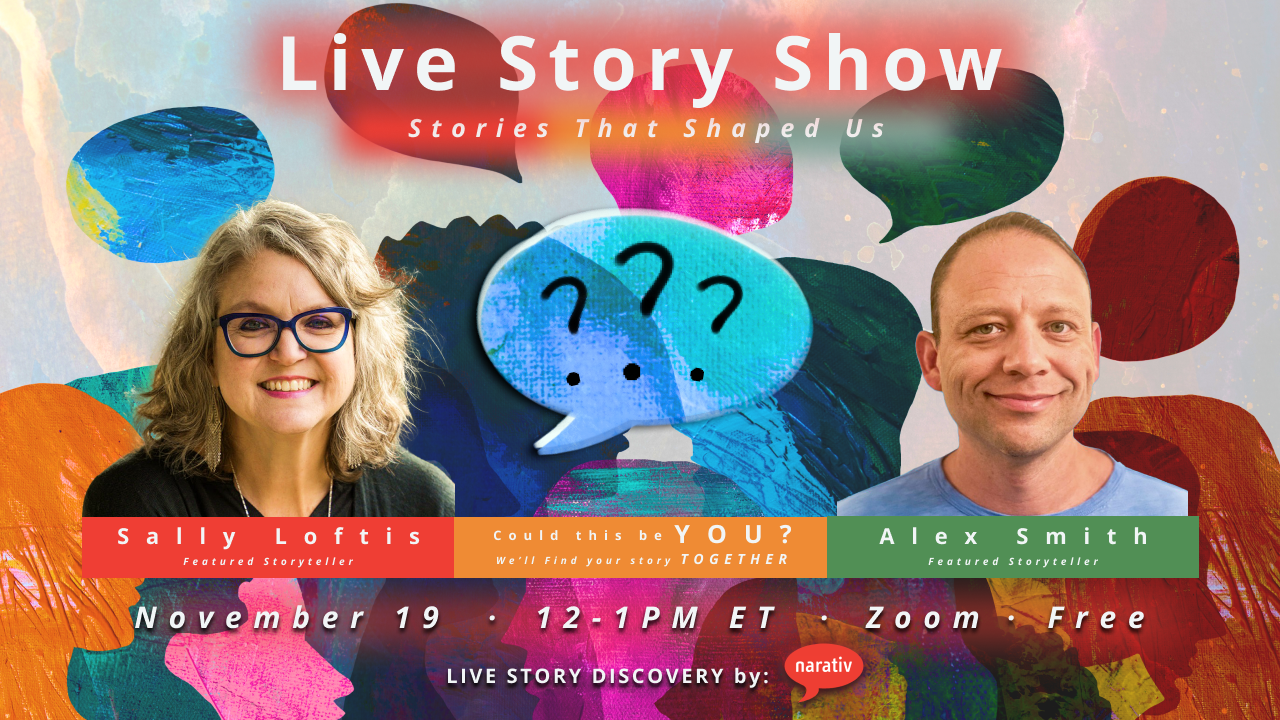
In a recent Leadership Story Talks debrief, hosts Jerome Deroy and Julienne Ryan reflected on the Stories That Shaped Us LIVE event held on July 16. The event brought together three past podcast guests to share six-minute personal stories about pivotal moments that shaped their lives and leadership.
Jerome and Julienne had worked with each storyteller beforehand. They knew the individual stories. They knew what each person wanted to share, what support they needed, and where the story was headed. But something different happened when the three storytellers came together live, on the same screen, telling their stories one after another.
Patterns began to emerge that no one could have fully predicted in advance.
That is one of the remarkable things about storytelling. A single story can be powerful on its own. But when stories are heard in relationship to one another, new meaning begins to surface. Connections appear. Themes echo. The listener starts to hear not only what happened to one person, but what might be true across many lives.
The Energy of Live Storytelling
Julienne reflected on the difference between hearing a story in preparation and hearing it in a live setting. A rehearsal or coaching session can reveal the shape of a story, but it does not fully replicate what happens when a person knows they are telling it to an audience in real time.
There is an energy that comes with “live.” The storyteller’s body, attention, and intention seem to align differently. The presence of listeners changes the act of telling. The story is no longer only something remembered or rehearsed. It becomes something offered.
That offering matters. When someone knows they are being listened to, the story can take on a different quality. The stakes feel more present. The details land more deeply. The storyteller is not simply reciting something from the past; they are bringing it into the room and allowing others to receive it.
This is part of what makes live storytelling feel both vulnerable and alive. The story may have been told before, but in that moment, with that audience, it becomes new again.
Adversity, Support, and Transformation
As Jerome listened to the three stories together, one clear pattern emerged. Each story contained a moment of serious adversity.
In Jennifer Langton’s story, the adversity was both physical and emotional: a devastating knee injury and the loss of her mother, two experiences she had not fully connected until a moment years later at the NFL brought them rushing back. In George Pesansky’s story, the adversity came in the form of being placed in a role where he was not expected to succeed, leading a tank crew despite being a chemical officer and, by his own admission, not knowing much about tanks when he began. In Katherine Carol’s story, the adversity was rooted in being a single mother, a woman in a difficult professional environment, and someone placed in a role where others seemed to expect her to fail.
The circumstances were very different, but the structure underneath them was similar. Each person faced a challenge that tested their identity, confidence, or sense of belonging. Each person encountered someone who made a difference. And each person eventually arrived at a new understanding of who they were and what they could offer.
That three-part movement — adversity, support, transformation — is at the heart of many powerful stories. It is familiar because it is deeply human. We may recognize it in myths, novels, films, or epic journeys, but it is not confined to fiction. It happens in ordinary lives as well.
The challenge appears. Someone helps us see or do something differently. We emerge changed.
When Loss Becomes Purpose
Julienne named another pattern she heard in the stories: the way a loss, fear, or moment of concern can be repurposed. In each story, something difficult became part of the storyteller’s purpose.
That does not mean the adversity was simple or welcome. It does not mean the pain disappears. But it does suggest that the meaning of an experience can evolve over time.
Jennifer’s injury and grief eventually became connected to her work in health and safety at the NFL. George’s uncertainty in the tank became part of his belief that ordinary people, prepared with intention, can do extraordinary things. Katherine’s early struggle in a professional role became part of her lifelong commitment to seeing possibility in people and building more inclusive systems.
These were not stories about hardship for hardship’s sake. They were stories about what people did with what happened to them. In each case, the event did not remain frozen in the past. It became material for leadership, advocacy, service, and change.
That is one of the gifts of reflecting on our stories. We begin to see that what once felt like a disruption may have become a source of direction. What once felt like a loss may have become part of what we now know how to give.
Identity in Motion
Julienne also observed that each story involved identity being shaped by circumstances. Some of those circumstances were within the storyteller’s control, and some were not. What mattered was how each person responded.
There are moments when life seems to ask us, directly or indirectly: Who are you now?
For George, that question appeared in a tank crew that others underestimated. For Katherine, it appeared in a job she needed to keep, under conditions that did not set her up to succeed. For Jennifer, it appeared years after her injury and loss, when a moment at the NFL helped her understand how her past could inform her future work.
In each case, the storyteller could have taken a different road. There were off-ramps available. They could have withdrawn, accepted the limits placed around them, or decided the experience was simply something to survive. Instead, each moved forward and allowed the experience to shape a clearer sense of purpose.
This is often how identity develops. Not in one grand declaration, but through a series of moments in which we decide what to do with what has happened to us.
Hearing the Same Story Differently
Another lesson from the debrief was that a story can continue to reveal new meaning each time it is told.
Julienne reminded listeners that we may assume a story is finished because we have told it before. We might think, “I already shared that with this group,” or “People have heard that one.” But a story is not only shaped by the teller. It is also shaped by the listeners, the timing, the context, and the purpose for telling it.
Fresh ears can bring fresh meaning.
A story told in one setting may reveal a lesson about resilience. In another, it may reveal something about mentorship, identity, grief, courage, or leadership. The facts may remain the same, but the meaning can shift depending on what the teller and the audience are ready to notice.
That is why important stories should not be mothballed. If a story continues to matter to you, it may still have work to do. It may still have something to teach you, and it may still have something to offer others.
Looking at Our Own Lives Through Story
Jerome encouraged listeners to look at their own lives through the same lens. Where have you experienced adversity, loss, fear, uncertainty, or a moment when you were not sure you belonged? Who helped you, lifted you, challenged you, or believed in you when you could not fully believe in yourself? And what did that experience make possible?
This is not only an exercise for people with dramatic life events. We all have versions of these stories. We have all faced moments when we did not feel ready, when we needed someone else’s support, or when a challenge eventually shaped how we live and work.
These moments can happen in childhood, at work, in relationships, in creative projects, in leadership roles, or in quiet personal decisions no one else may have seen. What matters is not whether the story is grand. What matters is whether it reveals something true about how you became who you are.
When we look at our lives this way, we begin to see structure where we may have seen only scattered events. We notice the moments that changed us, the people who helped us, and the choices that moved us forward.
Bringing More Humanness Into Communication
Julienne shared that even in her own writing that morning, she found herself asking a simple question: instead of just listing facts, what if she told the reader what happened as a story? What if she included the human context, the why, and the experience behind the message?
That question applies far beyond public speaking or formal storytelling. It applies to the way we write emails, make requests, explain decisions, lead meetings, introduce ideas, or advocate for change.
Facts matter. But facts alone often do not create connection. When we bring in the story — what happened, why it mattered, what changed, what was at stake — we invite the listener or reader into a different kind of relationship with the information.
The question is not always, “How can I make this more dramatic?” More often, it is: “How can I make this more human?”
That shift can change the conversation.
The Story Beneath the Lesson
The debrief offered a simple but powerful reminder: stories do not only communicate what happened. They reveal how we make meaning from what happened.
The live event showed how three very different lives could carry a shared structure of adversity, support, and transformation. The debrief showed how listening for patterns helps us understand those stories more deeply and apply their lessons to our own lives.
Whether we are speaking to a team, writing a message, sharing a personal experience, or trying to understand our own next step, story helps us move beyond information and into meaning.
Because when we tell a story, we are not only saying, “This happened.”
We are also asking others to see why it mattered.
EXPERIENCE THE LISTENING LAB
Great leaders aren’t just great communicators—they’re great listeners. Start your free one-month trial of The Listening Lab and strengthen one of the most valuable leadership skills you’ll ever develop: