
Leadership Story Talks, Episode 220 · Listen to the full conversation with Galya Frayman Molinas and Gamze Dinckok Yucaoglu HERE
Gamze Dinckok Yucaoglu describes it as having the rug pulled out from under her. As a third-generation member of her family’s business, she returned to Turkey from the United States in 2004 to join the company, on a path that had largely been mapped out for her. Ten years later, a dispute in the generation above her ended with her being asked to leave. The career she had built was gone, and so was much of the identity that came with it. At the time, she could see only the path she was losing. Her husband helped her see something else: she still had the ability to create another one.
In this episode of Leadership Story Talks, Jerome Deroy and Julienne Ryan speak with Gamze and Galya Frayman Molinas, co-founders of the What’s Next Initiative and co-authors of The Many Lives of Work: Rethinking Career in the Age of Longevity. Galya’s transition came under very different circumstances. After more than two decades with the Coca-Cola Company, in a career that took her across countries, cultures, and senior leadership roles, she chose to move on. Her question was less about what she was leaving than about what she wanted to carry forward, and which parts of the identity her global life had shaped belonged in the next chapter.
When the Old Model Stops Working
Their experiences eventually brought them together in London, where a courtesy coffee arranged by a mutual friend became an ongoing conversation. They read the same books, shared research, and held each other accountable as they explored their own next steps, until they realized the questions they were asking were much larger than either of them.
What does a career look like when people are living, and working, significantly longer? The traditional model assumes a simple sequence: education, then work, then retirement. As Gamze points out, the middle section is getting longer, and what we learned in our twenties may not carry us through to the end. Meanwhile, we change. Our priorities, families, health, and ambitions shift. We may want to step away, study again, care for children or parents, or do an entirely different kind of work at fifty than we did at thirty.
Our language hasn’t caught up. A gap on a résumé still looks suspicious, a sabbatical seems to need an explanation, and a step sideways is easily read as a step backward. Galya and Gamze argue that it is the model, not the person, that needs to change.
From Ladders to Perennials
The ladder assumes one direction: up. You start at the bottom and keep climbing, and if you stop or step back, you’ve failed. The metaphor leaves little room for rest, exploration, or reinvention.
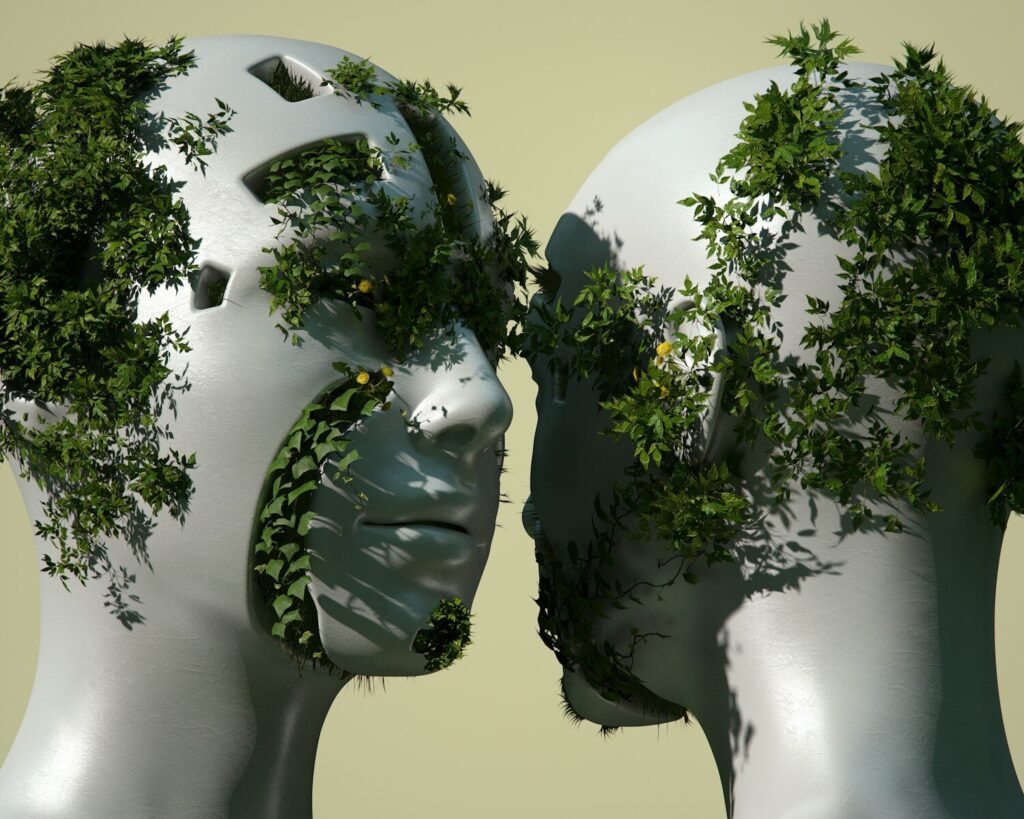
Galya and Gamze offer another image: the perennial. A perennial plant grows, flowers, goes dormant, tends to its roots, and blooms again. The flower may look different each time, but it grows from the same root system. Careers can work the same way. A pause can be a time of renewal, and a new direction draws on skills, relationships, and curiosities that remain part of those roots, even ones we haven’t used in years. Galya describes career development as deciding which roots to keep watering. Seen that way, nothing is automatically wasted.
The Clues Were There All Along
Julienne was particularly drawn to the book’s invitation to go back to the child within us. It can sound counterintuitive for someone with decades of experience and an impressive title, but earlier versions of ourselves hold clues: the interests we had before we learned what was “practical,” and the ways we naturally approached the world. That matters during a transition, when a professional identity can grow so dominant that we forget how much of us exists beyond it. For Galya, that identity was tied to one of the world’s most recognizable companies; for Gamze, to a business and a family. Letting go meant discovering which parts were genuinely theirs to keep.
The System Has Not Caught Up Yet
Jerome wondered what happens when individuals are ready to think differently about careers but the organizations hiring them are still looking at the ladder. Galya calls this a systemic gap. Workforces are aging, five generations may now work side by side, and technology, including AI, is speeding up how fast skills and roles change. Yet many institutions still run on assumptions built for a different working life. She believes education, organizations, and hiring practices will catch up eventually; in the meantime, much of the responsibility sits with individuals and communities. Jerome sees a parallel in business storytelling: twenty years ago, organizations had to be persuaded it belonged at work at all, and today it is widely recognized as a leadership skill. Systems tend to change after individuals start working differently.
No Prize for Getting There First
For anyone in the middle of a transition, Gamze offers perhaps the most reassuring idea of the episode: there is no award for finding your next thing the fastest. When a familiar path ends, the instinct is to replace it quickly, but speed can pull us straight back toward the life we just left. She encourages people to start with themselves instead. What do you want now? What do you want to carry forward? What are you ready to leave behind? Midlife can bring a particular freedom here. Earlier in life, many of us choose what will make our parents, teachers, or families proud. Later, we may finally ask what would make us proud of ourselves.
That takes time, and it takes support. Galya and Gamze became mentors to each other almost by accident, and they encourage others to build similar scaffolding: peers asking the same questions, mentors who have been there, and people different enough from us to show possibilities we can’t see alone. When there is no longer one correct path, seeing many different paths becomes valuable.
Tending the Roots
Near the end, Gamze returns to longevity. Longer lives give us more years, but what we put into them is up to us. Galya offers the perennial as an identity in itself. The next time someone asks what you’re doing during a period of change, you don’t have to apologize for what you’re no longer doing. You may simply be tending your roots, getting ready for whatever blooms next.
Listen to the full conversation with Galya Frayman Molinas and Gamze Dinckok Yucaoglu: HERE
Experience The Listening Lab
Is there something hard to communicate right now: a presentation, a difficult conversation, a big change?
The Listening Lab is a small, confidential group that meets once a month on Zoom to practice really listening, to each other and to ourselves. Members bring what they’re working through, and the group listens and asks questions before anyone jumps to advice.
Your first month is free after a short application and a 15-minute fit call ~
APPLY HERE: