
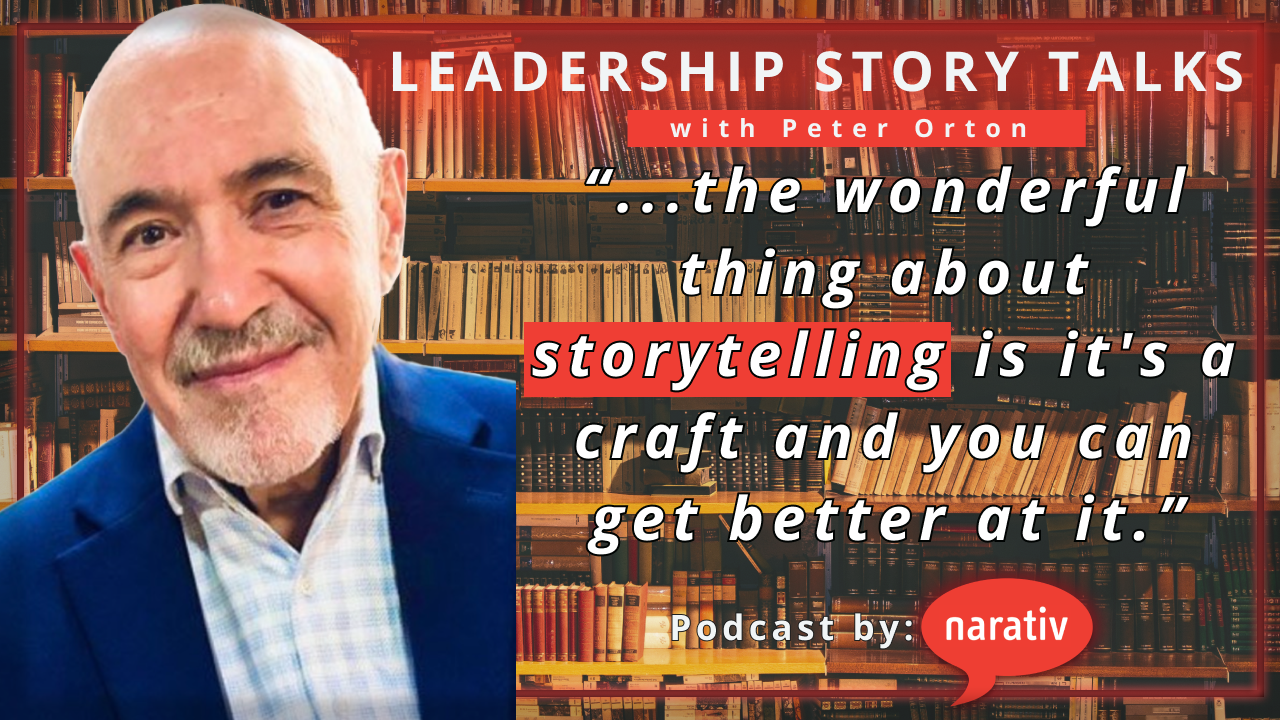
“The wonderful thing about storytelling is it’s a craft and you can get better at it.” — Peter Orton
At 30, Peter Orton had tenure as a public school teacher and the promise of a secure career. But when his father sensed he wasn’t happy, he asked a simple question: “So what’s stopping you?” Within a week, Peter resigned and eventually headed west to pursue his dream of becoming a writer.
Nearly a decade later, a phone call from legendary writer Richard Matheson changed everything. Peter had submitted scripts for Steven Spielberg’s Amazing Stories. Matheson’s notes? Two words: “Shoot it.” Soon after, Peter was working at Universal Studios as a story editor.
That turning point began a career spanning Hollywood, Stanford, IBM, and the Johns Hopkins Bloomberg School of Public Health. Along the way, Peter founded IBM’s Global Storytelling Practice and became a teacher and scholar of how stories work.
In this episode, Peter joins Jerome Deroy and Julienne Ryan to reflect on a lifetime of studying, practicing, and teaching storytelling—and what he’s learned about the craft along the way.
You’ll Hear:
- The conversation with Peter’s father that led him to leave a tenured teaching position at age 30 and head to Los Angeles
- Why pursuing his dream didn’t mean overnight success—and what Peter did for nearly a decade to learn the craft of screenwriting
- The remarkable phone call from Richard Matheson that led to Peter becoming a story editor on Steven Spielberg’s Amazing Stories
- How Peter’s interests in storytelling, education, and media eventually came together at Stanford and IBM
- Why IBM began investing in storytelling as a leadership and communication competency
- The difference between recognizing a story and understanding what actually makes something a story
- Why knowing your audience may be the most important rule in storytelling
- How concrete, sensory details help your audience create a “little movie” in their minds—and make a story more memorable
- Why stories often become shorter and stronger as we refine them
- Peter’s thoughts on the increasingly visual future of storytelling and communication
- Why turning points—both intentional and accidental—can be powerful starting places for finding our stories
- Why storytelling isn’t something you either have or don’t have, but a craft that improves through practice and feedback
Resources & Links
Peter Orton is the author of The Elements of Story: How to Craft Engaging Story for Effective Communication and Presentation.
Learn more about Peter and his work at Working Stories
Experience The Listening Lab
Looking for greater clarity around your own story and purpose?
The Listening Lab is a community for leaders, coaches, and professionals who want to think more clearly, communicate more authentically, and discover the stories that move people. Start with a free 30-day trial:
https://listeninglabfreespot.carrd.co
Narativ’s online course in partnership with New Mexico State University Global Campus: Lead With Your Story (self-paced, on-demand course)
Podcast listeners get 25% off – Use code NARATIV → Register Here
Learn more about how to leverage Narativ’s storytelling method for your pitch and sales team: Download our free e-book, or you’re welcome to schedule a free 15-minute call with Jerome.